No products in the cart.
ANZAC Day: Meaning, History & Why We Remember
24 April 2026

ANZAC Day is a time for people across Australia and New Zealand to stop, take a breath, and think about what others have given for the life we live today.
It’s not just history. For many of us, it’s personal.
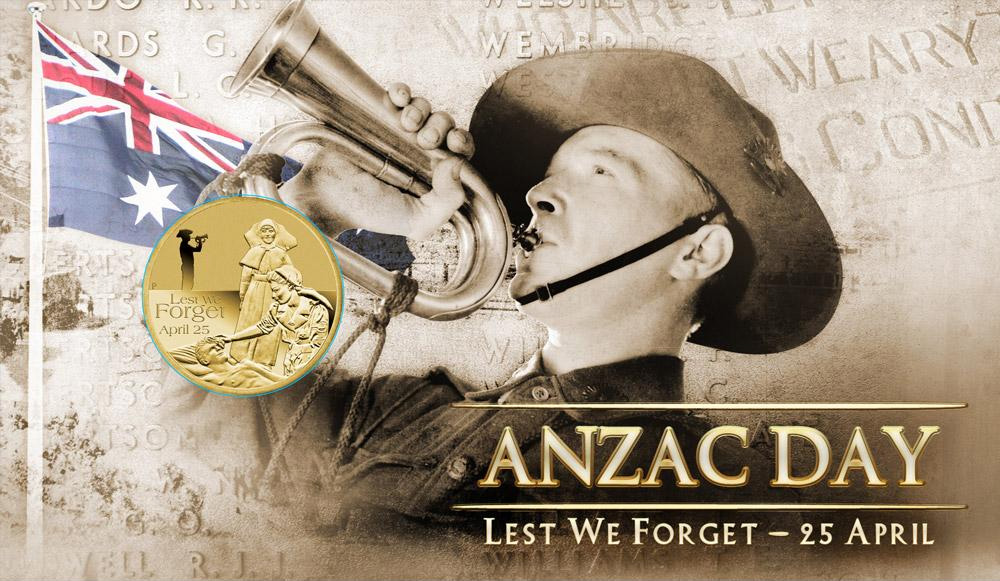
Anzac Day
What does ANZAC stand for?
ANZAC stands for the Australian and New Zealand Army Corps.
It’s a name that goes back to World War I, when Australians and New Zealanders served side by side. Over time, it’s come to mean a lot more than just a military term. It represents courage, mateship, resilience & sacrifice.
Why ANZAC Day is important
Every year on 25 April, we remember the landing at Gallipoli in 1915. The 25th of April was officially named Anzac Day in 1916.
It was meant to be a quick campaign. It wasn’t.
What followed was months of hardship, loss, and determination. Thousands of Australians and New Zealanders never made it home.
Even though the campaign didn’t succeed militarily, it shaped the identity of both nations. That ANZAC spirit, looking out for your mates, pushing through tough conditions, showing quiet courage, started there.
It’s about more than history
ANZAC Day isn’t only about Gallipoli.
It’s about everyone who has served since—across wars, conflicts, and peacekeeping missions around the world.
If you’ve ever stood at a Dawn Service, you’ll know the feeling. The stillness. The silence. The sound of the Last Post carrying through the morning air.
It stays with you.
Remembering Tim

Timothy Charles Turner 4720253 TURNER Timothy C SA 5RAR 1969
Timothy Charles Turner was our Uncle, Tim was born on 17 February 1948 in Kingscote, Kangaroo Island, and like many young Australians, he grew up in a close-knit community where everyone knew each other.
He was called up on 18 July 1968 and served with the 5th Battalion, The Royal Australian Regiment (5RAR). He was sent to Vietnam, doing what was asked of him, like so many others of his generation.
Tim died on 15 June 1969, after being struck by fragments from an enemy mine. He was just 21 years old.
Tim was wounded during operations and died of those wounds on 15 June 1969 at the 24th US Evacuation Hospital in Long Binh, South Vietnam.
Still only just starting out in life.
That’s the part that stays with you, how young he was, and how quickly everything changed. That’s something that never really sits easy.
Every year on Kangaroo Island, someone from our family carries Tim’s flag at the Dawn Service. It’s something we’ve always done, and now the younger generation takes part too.
It’s our way of remembering him—not just as a soldier, but as a son, a brother, an uncle. Someone who had a whole life ahead of him.
And it’s a way of making sure his story isn’t lost.
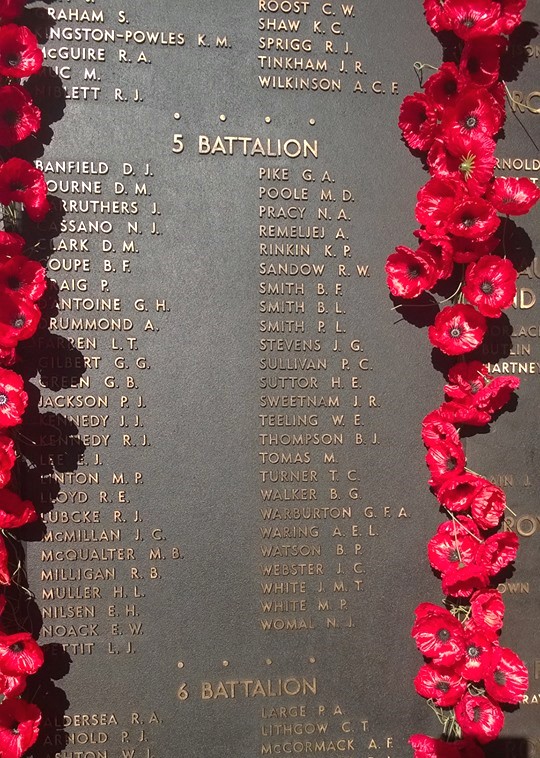
ACT War Memorial Wall
Remembering John (BERT)

John Bert Riedel No.602
Private John Bert Riedel was my great uncle.
He was born in Nuriootpa, South Australia, and like so many young Australians of his time, he left home to serve in the Australian Imperial Force during the First World War.
John was part of the 32nd Battalion, one of the units sent to the Western Front in France in 1916. Many of these young men had only just arrived before being thrown straight into the realities of war.
It didn’t take long for things to change. John (Bert) was wounded in action and died on 21 July 1916 in France. He never made it home.
When you stop and think about it, it’s hard to grasp how quickly it all happened, leaving a place like Nuriootpa, travelling halfway across the world, and within such a short time, everything was gone.
He was one of thousands who died during that time. But to our family, he wasn’t just a number. A son. A brother. A young man with a life ahead of him, gone.
Why we remember
Stories like Bert and Tim’s are why ANZAC Day still matters.
It’s not just about Gallipoli or history books, it’s about real people from towns across Australia and New Zealand, who stepped forward and never returned.
For us, remembering is part of what everyone does each year.
Because if we don’t tell these stories, they fade.
And they’re too important for that.
What is the tradition for ANZAC Day?
Anzac Day remembrance takes two forms. Commemorative services are held at dawn – the time of the original landing in Gallipoli – across the nation. Later in the day, ex-servicemen and women meet to take part in marches through the major cities and in many smaller centres. Commemorative ceremonies are more formal and are held at war memorials around the country.
A typical Anzac Day ceremony may include the following features: an introduction, hymn, prayer, an address, laying of wreaths, a recitation, the Last Post, a period of silence, either the Rouse or the Reveille, and the national anthem. After the Memorial’s ceremony, families often place red poppies beside the names of relatives on the Memorial’s Roll of Honour, as they also do after Remembrance Day services.
Rosemary is also traditionally worn on Anzac Day, and sometimes on Remembrance Day. Rosemary has particular significance for Australians as it is found growing wild on the Gallipoli peninsula. Since ancient times, this aromatic herb has been believed to have properties to improve the memory.

Anzac Day Lest We Forget
Why is this day special to Australia & New Zealand?
On this day we honour all the men and women who have participated in wars, conflicts and peacekeeping operations around the world, including the ANZACs (Australian and New Zealand Army Corps) who fought at Gallipoli in Turkey during World War I. Incredibly, well over 100 years have passed since Australia’s involvement in the First World War.
On the morning of 25 April 1915, the Anzacs set out to capture the Gallipoli peninsula in order to open the Dardanelles to the allied navies. The objective was to capture Constantinople (now Istanbul in Turkey), the capital of the Ottoman Empire, and an ally of Germany.
The Anzacs landed on Gallipoli and met fierce resistance from the Ottoman Turkish defenders. Their plan to knock Turkey out of the war quickly became a stalemate, and the campaign dragged on for eight months.

Anzac Day lest we forget
At the end of 1915, the allied forces were evacuated. Both sides suffered heavy casualties and endured great hardships. Over 8,000 Australian soldiers were killed. News of the landing on Gallipoli and the events that followed had a profound impact on Australians at home. The 25th of April soon became the day on which Australians remember the sacrifice of those who had died in the war.
The Anzacs were courageous and although the Gallipoli campaign failed in its military objectives, the Australian and New Zealand actions during the campaign left us all a powerful legacy.
Remembering the animals of war
Lest we forget the animals & birds who also served alongside soldiers.
Horses, donkeys, dogs and pigeons all played a vital role during the war—carrying supplies, delivering messages, and helping the wounded. Many stayed alongside soldiers in the harshest conditions and never made it home.
In World War I alone, more than 8 million horses, donkeys and mules and around 1 million dogs were lost. Carrier pigeons delivered critical messages across battlefields
They all served faithfully to the end.
There are even stories of soldiers using glow worms in jars to create just enough light to read a letter or a map in the darkness of the trenches.
If you’d like to learn more about these lesser-known stories, you can read more here.

Animal Heroes Anzac DayThe Anzac Biscuit
We have Anzac biscuits available all year round for our visitors to have with their tea or coffee at our Emu Ridge Cafe. We like to tell the story of the Anzacs to others and help keep the spirit alive.
During World War One, the friends and families of soldiers and community groups sent food to the fighting men. Due to the time delays in getting food items to the front lines, they had to send food that would remain edible, without refrigeration, for long periods of time that retained high nutritional value; the Anzac biscuit met this need.

Anzac Biscuits
Although there are variations, the basic ingredients are: rolled oats, sugar, plain flour, coconut, butter, golden syrup or treacle, bi-carbonate of soda, and boiling water.
The biscuit was first known as the Soldiers’ Biscuit. The current name, Anzac Biscuit, has as much to do with Australia’s desire to recognize the Anzac tradition and the Anzac biscuit as part of the staple diet at Gallipoli.

Anzac Biscuits
The Anzac biscuit is one of the few commodities that are able to be legally marketed in Australia using the word ‘Anzac’, which is protected by Federal Legislation.
Traditional Anzac Biscuit Recipe:
Preheat oven to 160°C. Line 2 baking trays with non-stick baking paper.
Combine flour, oats, coconut and combined sugar in a large bowl.
Stir the butter, golden syrup and water in a small saucepan over medium heat until the butter melts and the mixture is smooth. Stir in the bicarbonate of soda. Add to the oat mixture and stir until well combined.
Roll level tablespoonfuls of the oat mixture into balls and place, about 5cm apart, on the prepared trays. Flatten until about 1cm thick. Bake, swapping trays halfway through cooking, for 15 minutes or until light golden. Set aside for 10 minutes to cool slightly before transferring to wire racks to cool completely.
Keeping the ANZAC spirit alive
At Emu Ridge, ANZAC Day isn’t just something we mark once a year.
It’s something we talk about, share, and pass on, especially to visitors who might not know the full story.
Because if we don’t tell these stories, they fade.
And they’re too important for that.
ANZAC Centenary fast facts
- It is 101 years since Australia became involved in the First World War. The ANZAC Centenary will be commemorated from 2014 to 2018.
- The mothers, sisters and wives left behind during World War I sent ANZAC biscuits made of oats, sugar, flour, coconut, butter and golden syrup to their sons, brothers and husbands at Gallipoli. ANZAC biscuits were hard and long-lasting, designed to survive the long journey to the troops. They were eaten instead of bread (which went stale quickly). Some men crushed them, mixed them with water and ate them like porridge.
- The last surviving ANZAC, Alec Campbell, died on 16 May 2002.
- World War I was often referred to as the ‘Great War’.
- In World War I, Australians not only served at Gallipoli but also on the Western Front (France and Belgium)as well as in the Middle East.
- The Australian Imperial Force (AIF), the Royal Australian Navy (RAN), the Australian Light Horse and the Australian Flying Corps all fought in World War I.
- The word ANZAC has been protected by Australian legislation since 1921. This ensures that the word is not misused. To use the word you must seek permission from the Minister for Veterans’ Affairs.
- Although women were not allowed to fight in World War I, many tended to the injured troops overseas and in Australia as members of the Australian Army Nursing Service.
- Simpson’s donkey was most often called Duffy, but was also called Abdul or Murphy.
- Two decades after the end of World War I, Australia once again followed Britain into war for World War II.
- Source here http://www.army.gov.au/our-history/traditions/anzac-day

Anzac Day Lest we forget
They shall grow not old, as we that are left grow old;
Age shall not weary them, nor the years condemn them;
At the going down of the sun and in the morning,
We will remember them.
Lest We Forget.
~~Bev~~